• © 2025 kiraluna.com Contact Me 0

Pruritus is a chronic itching condition that can persist for weeks to years, with a variety of underlying causes, such as Carpa.

Current treatments primarily offer short-term symptomatic relief rather than addressing the root cause.


Chronic Pruritus

Also known as Inflammatory Itch, it is a primary symptom of many chronic inflammatory conditions, including
C.A.R.P.A.

An increased understanding of the
neuroimmunology of pruritus supports MRGPRX2 as a key receptor driving the release of a wide range of itch-causing cytokines, which are highly deregulated in inflammatory conditions.

My challenging struggle with chronic pruritus began in 2014 as a minor irritation on my leg, which I initially thought was an insect bite.

Within a few weeks, it developed into persistent, widespread, and painful itching that covered my entire body.

This was before my
C.A.R.P.A. diagnosis; I later discovered that this was the first sign of it.
Stacks Image 170
Stacks Image 188
The relentless and constant itching caused sleep deprivation, a loss of appetite, anxiety, chronic fatigue, and scratching that left my skin raw, bleeding, and inflamed, leading to intense pain and distress.

Despite the doctor's best efforts, my whole body itched nonstop day and night for
over a year.

Many specialists evaluated my condition, which resulted in moving me between different hospital wards for various diagnostic tests, including multiple MRI scans, lumbar punctures, biopsies, and blood tests. I spent more time in hospitals and doctors' offices than at home.

I was prescribed various topical, oral, and injectable forms of medications;


Among many medications like steroids and antihistamines, I was also prescribed Nozinan, which not only failed to relieve my symptoms but also caused a life-threatening reaction.

Since I was neither psychotic nor hallucinating, the reason for prescribing levomepromazine for pruritus and the allergies remains unclear today.

Before 2014, I had never experienced allergies, and since I wasn't diagnosed with Carpa until later, I was completely unaware that, instead of helping, some of these
medications, chemicals in foods, and tap water could cause allergies and inflammation.

Ultimately, after numerous trials with various medications, Tavegil emerged as the sole antihistamine capable of alleviating the itching.
Stacks Image 221
Stacks Image 223

Initially, I was prescribed Tavegil in tablet form, but I developed a severe allergic reaction—most likely to a coloring agent in the pills. In contrast, the liquid formulation administered by injection did not trigger the same life-threatening response and proved significantly more effective than other treatments.

Because prolonged hospitalization was not an option, and with no nursing support at home, I was forced to learn how to self-administer intramuscular injections, including steroids. It was a process that was not only physically demanding but also mentally and emotionally exhausting.

Over time, however, the toll of these medications became impossible to ignore.

I began losing hair in large clumps, gained 40 kilos, and developed a range of persistent symptoms, including severe abdominal pain, chronic fatigue, blurred vision, respiratory difficulties, and recurrent skin rashes.

Despite these effects, Tavegil remains the only antihistamine that reliably controls my chronic pruritus. As a result, I am forced to rely on it intermittently when the itching becomes unmanageable.

Compounding the issue, the injectable form is difficult to obtain and rarely available in pharmacies and stocked by only a limited number of hospitals, adding yet another layer of instability and burden to an already unmanageable condition.

Each new prescription—steroid creams, cortisone, injections, and a rotating cast of “standard” interventions—didn’t just fail to help. Over time, their cumulative impact became too much for my body to
handle.
Stacks Image 258
Stacks Image 265
Despite ongoing symptoms, I was ultimately forced to discontinue the injections because the treatments themselves had become intolerable.

With each new medication, the same cycle repeated: worsening itching, new allergic reactions, escalating inflammation, and systemic side effects that extended far beyond the original condition.

What was framed as routine management was, in reality, a steady amplification of harm. The pattern, however, was not immediately recognized.

It was only after I was diagnosed with C.A.R.P.A. (Complement Activation-Related Pseudoallergy) that everything came into focus.

The medications were not simply ineffective—they were actively triggering the very immune responses they were meant to suppress.
This realization exposed a deeper clinical failure: the absence of recognition for an underlying condition that rendered these treatments not just inappropriate, but inherently destabilizing. Instead of resolving symptoms, each intervention compounded them, creating a predictable yet overlooked cascade of reactions.

This was not a matter of trial and error. It was a textbook catch-22.

The treatments deemed “necessary” were, in practice, exacerbating the underlying disorder they were prescribed to manage. Relief was always presented as one adjustment away—yet each attempt intensified the cycle, leaving my condition more reactive, more complex, and more entrenched.

And still, this pattern continued under the banner of standard care.

Stacks Image 225
Stacks Image 250
As a result, my range of safe and effective therapeutic options became severely limited, with a direct and lasting impact on my overall health, functional capacity, and quality of life.

Considering that throughout all of these years, I have been prescribed several medications that prompted not only skin allergies but even life-threatening reactions, I am now exceptionally cautious regarding taking any new pharmaceuticals or other chemicals, especially since I have endured years of Carpa triggers that continue today.

Although the itching eventually improved, it returned after I began breast cancer treatment with Tamoxifen. It now affects mostly my feet, legs, and back—particularly at night, though it can occur during the day as well.


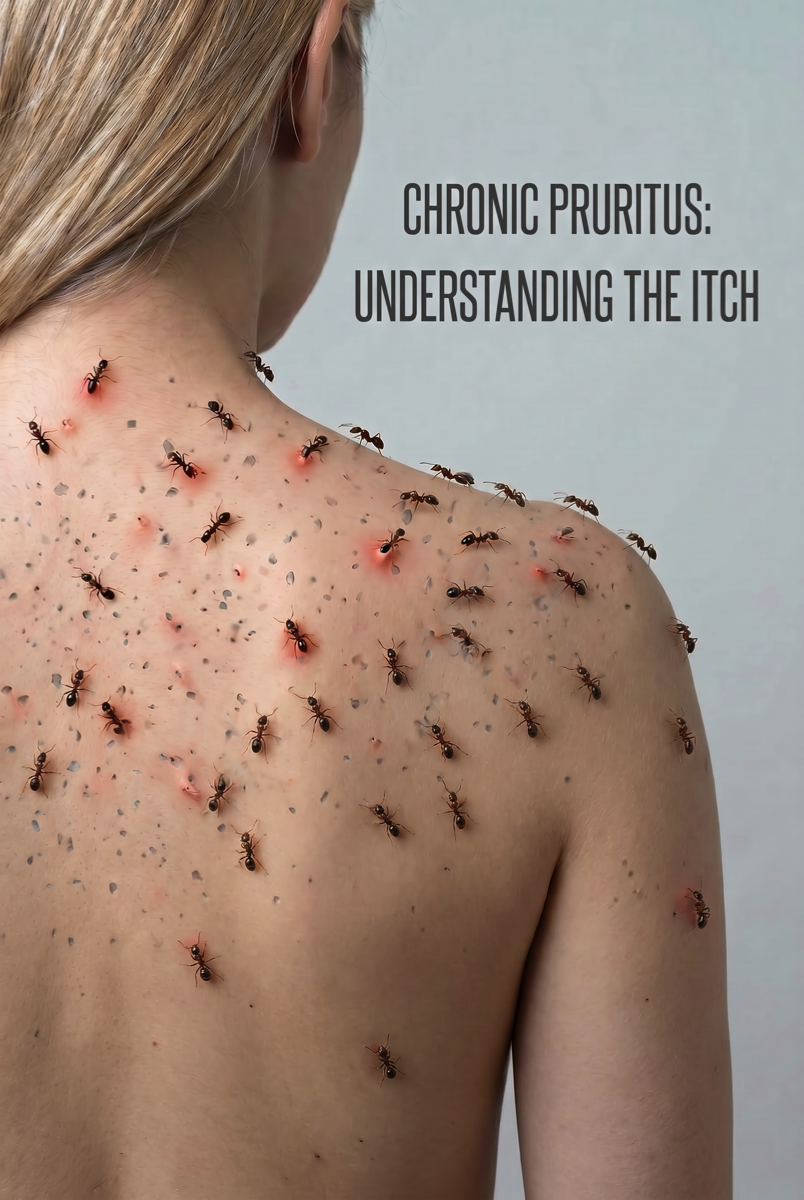
Formication


Puritus feels like having small insects crawling under and on top of the skin; this is called formication, which is a physically and mentally exhausting experience, significantly affecting sleep, eating habits, and overall quality of life. Certain medications, including steroids, ciprofloxacin, ketoconazole, amantadine, and atypical antipsychotics, can cause formication.

These persistent symptoms require a thorough investigation into their underlying causes, which might extend beyond C.A.R.P.A.

Without assistance from the healthcare system, my symptoms will remain an agonizing mystery that I must continue to endure.
Kiraluna

Kiraluna